

Business valuations for CEOs ready to exit.
Your business is by far your biggest asset. If you're thinking of selling, don't give your life's work away. Get a business valuation and know exactly where you're standing. Before the room fills with suits, know exactly what it's worth, and walk in with a number you can defend.
Get your valuation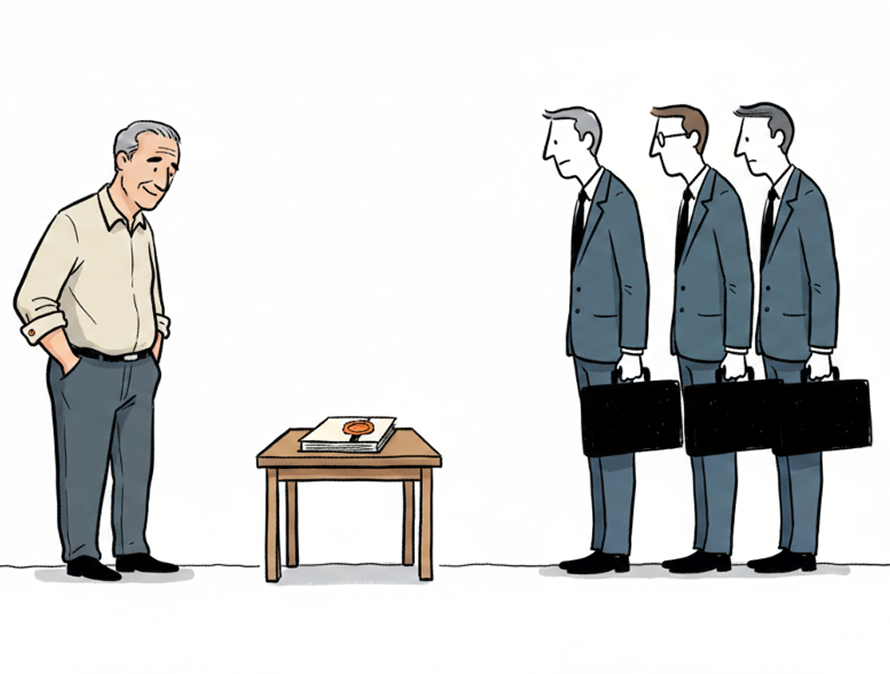

Most owners walk in underpriced.
You've spent decades building something. It's the biggest asset you own, and you've never sold it before.
When the moment comes — whether an LOI is already on your desk, a partner is ready to buy out, or a sale is eighteen months away — the first question is the only one that matters. What is it actually worth?
If one of these is your situation, you're in the right place.
An LOI on your desk.
A buyer reaches out cold, sometimes with "two or three years of work" framed as the purchase price, and the owner doesn't know if it's a lowball.
A partner exiting.
You want to buy them out. Or they want to buy you out. Either way, the number has to be one both sides — and their attorneys — can live with.

Passing it to your kids.
You want to gift the company to your children or grandchildren while you're alive. The IRS will need a certified number, and so will your attorney and your accountant.
An SBA-backed acquisition.
Someone is buying your company with an SBA 7(a) loan. The lender requires a certified valuation so the loan isn't backing an inflated price. Without it, the deal doesn't close.
Most owners go to market with a number someone gave them in ten days for ten thousand dollars. Then a buyer's attorney spends an hour taking it apart, and the floor of the negotiation drops by millions.
WHY M1VALUATION
The people valuing your business have built one.
Most valuation firms run analysts through templates. M1Valuation is run by former Chief Financial Officers who spent their careers building value inside operating companies — raising capital, negotiating transactions, and sitting on the same side of the table you're about to sit on. The number on your report comes from people who know how value gets made and measured.
We've built a practice that specializes in business value — and we've done it for the kind of owner who only sells a business once.
Aggregate deal value
$5B
Valuations completed
200+
Combined executive years
50+
Largest deal size
$3B+
Industries served
15+
Stories from owners like you.


Frequently Asked Questions
M1Valuation is a business valuation practice built by senior advisors who have spent two decades on the inside of negotiations like yours. Here are the most common questions we've encountered:

Q. How does a business valuation help me negotiate with potential buyers?
A certified valuation gives you a defensible number grounded in your actual financials, comparable transactions, and the cash flows the business produces. When a buyer challenges your price, you have specific evidence to point to — not just an opinion. This is the difference between conceding and holding firm.
Q. What makes a valuation "certified" and when do I need one?
A certified valuation is signed by a Certified Valuation Analyst (CVA) credentialed through NACVA. You need one whenever a third party — the IRS, a lender, a court, or a buyer's counsel — is going to scrutinize the number. SBA loans, estate transfers, partner buyouts, and litigation typically require it.
Q. How long does the valuation process take?
Most engagements run 3–5 weeks from kickoff to final report. The timeline depends on how clean your financials are and how responsive your team is to information requests. Rush timelines are possible but cost more and increase the chance of mistakes.
Q. Can a valuation actually increase my sale price?
Indirectly, yes — and significantly. The valuation surfaces value drivers buyers will pay for and weak spots they'll use to negotiate down. Owners who get valued 12+ months before going to market often add 20–40% to their exit number by addressing what the valuation surfaces.